You stand barefoot on warm, damp sand as a tranquil crystalline wave glides silently over your feet, dissolving the accumulated fatigue of the day. Or you sprint in sudden panic through the narrow hallways of your apartment, where icy, murky water already laps at your knees, forcing you to gasp for breath. Water in dreams is among the most cinematic, sensory, and emotionally charged motifs in human psychology.
Upon waking from such an intense nocturnal experience, the initial impulse is almost universal: open a search engine and type “what does it mean to dream about water?” The online answers tend to be rigidly prescriptive: traditional dream books promise either sudden wealth or bitter tears, domestic squabbles, or hidden betrayal. Yet the human psyche is far more sophisticated than mechanistic dictionaries. Much like dreams of flight, water in our sleep does not foretell external fate; it mirrors the emotional climate and boundaries of our waking life.
From Folklore to Freud: Why Dream Dictionaries Miss the Mark
The image of water has fascinated human imagination across millennia. Popular dream dictionaries interpret it through vastly divergent lenses:
- Gustavus Hindman Miller: The influential early 20th-century compiler framed water around social status and material fortunes. A clear, calm river promised financial prosperity, domestic joy, and professional success. Murky, turbulent, or foul-smelling water portended moral ruin and depression. Slipping into dirty water foretold severe life missteps, while drinking fresh water promised the fulfillment of cherished desires.
- Psychoanalytic Tradition (Sigmund Freud): In psychoanalytic theory, water is fundamentally tied to intrauterine existence, birth, and maternal safety. Swimming or plunging into deep water signaled repressed sexual desire or an unconscious longing for unconditional intimacy. Choking or drowning revealed acute panic over losing emotional self-control.
- Carl Jung and Archetypal Depths: Jung recognized water as the quintessential archetype of the collective unconscious. Plunging below the surface represents a descent into the unacknowledged shadow, repressed instincts, and latent creative potential of the self.
- David Loff: Emphasized that universal templates do not exist. For Loff, water serves as a sensitive barometer of emotional equilibrium. The decisive variable is personal agency: are you piloting a craft and swimming with ease, or is the element overpowering and submerging you?
The contradiction is self-evident: if one authority promises windfall wealth, another warns of bitter sorrow, and a third diagnoses suppressed sexuality, which one are you supposed to believe?
Traditional dream dictionaries fail because they impose static superstitions onto complex, living human minds. The same ocean storm can signify creative breakthrough for one person and profound exhaustion for another—because the dictionary knows nothing of your waking reality or how you actually felt inside the dream.
The Neuroscience of Water: Somatosensory Cues and REM Triage
When you close your eyes, the dreaming brain does not sever contact with the physical body. Contemporary somnology and cognitive neuroscience demonstrate that water-themed dreams arise primarily from two empirical mechanisms.
The first mechanism is somatosensory incorporation. In a comprehensive systematic review published in Sleep Medicine Reviews (2024) by neuroscientists from the IMT School for Advanced Studies Lucca and Radboud University, researchers documented how bodily stimuli routinely penetrate sleep architecture. Mild dehydration, an overheated bedroom, a heavy duvet, or a full bladder are rapidly synthesized by the visual cortex into dramatic narratives: wandering through arid deserts, longing for an ice-cold beverage, or sheltering under torrential downpours.
The second mechanism is overnight emotional regulation. In a seminal investigation published in Current Biology, UC Berkeley neuroscientist Matthew Walker and researcher Justin Yao demonstrated that Rapid Eye Movement (REM) sleep actively recalibrates amygdala reactivity. The brain processes high-intensity waking stress in a safe, neurochemically calm virtual space. Fluid, formless, yet capable of sweeping away solid foundations, water serves as the brain’s ideal visual language for metabolizing accumulated emotional charge.
This biological reality aligns directly with Michael Schredl’s continuity hypothesis of dreaming, detailed in Consciousness and Cognition: nocturnal narratives reflect the intensity of a person’s real-world concerns and emotional knots, rather than supernatural premonitions.
Clinical Observation: When Rising Waters Signal Burnout

In clinical dream analysis, water-themed nightmares frequently expose truths that individuals conceal even from themselves. Consider a characteristic clinical profile: a 32-year-old engineering project manager known for exceptional reliability, precision, and composure, who sought guidance for an exhausting recurring nightmare.
“I find myself in my cozy living room, but dark, freezing water begins seeping through the baseboards and under the front door. At first it merely coats the wooden floor, then reaches my ankles, then rises past my knees. In sheer panic, I grab my laptop and notebooks, desperately piling them onto the couch, but the water rises faster and faster. In the climax of the dream, it reaches my throat, and I wake gasping for air with a racing heart.”
Consulting a traditional dream book would have pointed her toward superstitious predictions of “unexpected money” or “family strife.” In psychological consultation, however, the real dynamic became apparent. Weeks earlier, two key engineers had resigned from her team. Instead of flagging the bottleneck to executive leadership, she absorbed their entire workload herself, working late into the night while suppressing rising dread.
In analytical psychology, the home represents the sacred perimeter of the self. The relentless flooding water symbolized a tidal wave of unexpressed workplace anxiety and external demands literally breaching her boundaries. Her subconscious was screaming that she was drowning in disproportionate responsibility. Once she renegotiated project deadlines, delegated tasks, and reclaimed personal boundaries, the recurring flooding dream never returned.
Dream Architecture: Why Context Outweighs the Symbol
Authentic dream analysis never isolates the symbol from the dreamer’s waking life. Notice how dramatically the psychological interpretation shifts based on waking circumstances:
| Water Dream Scenario | Archaic Dream Book Prediction | Contextual Psychological Analysis |
|---|---|---|
| Turbulent ocean, violent storm | Financial ruin, familial lawsuits, and misfortune | For an entrepreneur launching an ambitious venture: constructive creative adrenaline. For an exhausted professional: an urgent warning of acute burnout. |
| Serene, glassy lake or quiet river | Impending marriage and effortless good luck | Following an emotional crisis: nervous system restoration. Amidst chronic stagnation: fear of emotional numbness and unexpressed potential. |
| Deep underwater submersion | Clandestine enemies or lingering sickness | A profound need for solitude and sensory deprivation, or an invitation to integrate vulnerable feelings long buried beneath waking defenses. |
4 Psychological Water Scenarios and What They Signal
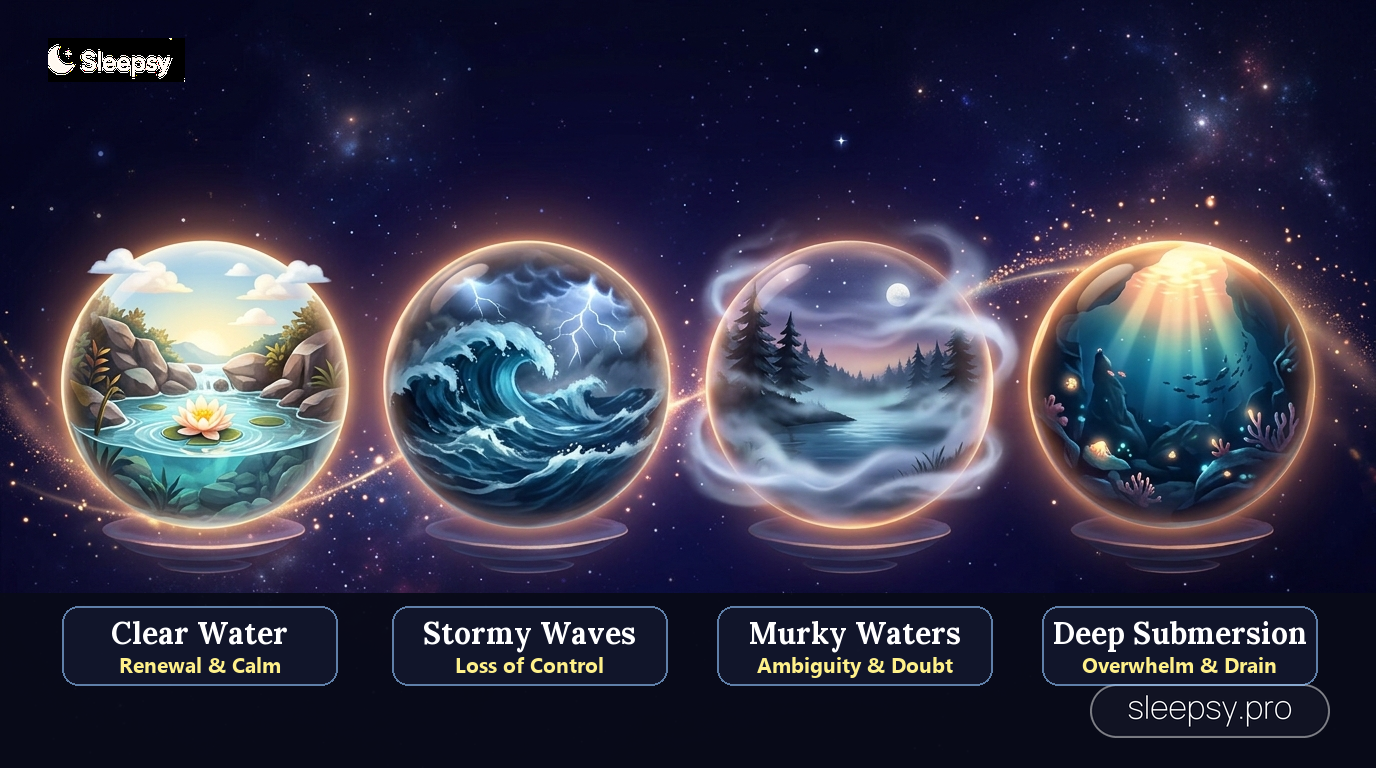
In clinical psychotherapy, four primary emotional archetypes dominate water-themed dreams:
- Crystalline, Clear Water (Mountain Springs, Gentle Lagoons): Accompanied by sensations of calm, coolness, and rejuvenation. Signals that an acute internal conflict has resolved; your nervous system is exiting hyperarousal and replenishing its adaptive reserves.
- Tidal Waves, Flash Floods, and Breached Shores: The classic hallmark of emotional flooding. These dreams occur when external circumstances shift faster than your psychological capacity to integrate them, urging you to slow down and rebuild personal boundaries.
- Murky, Stagnant, or Swirling Muddy Water: Highlights waking ambiguity and unaddressed doubt. This often surfaces in toxic workplace environments, avoided conversations with a partner, or moral dilemmas you hesitate to inspect in broad daylight.
- Submersion, Sinking, or Inability to Reach the Surface: While sometimes linked to nocturnal airway resistance or sleep apnea, this psychologically reflects helplessness—bearing a weight of expectations that threatens your fundamental well-being.
Deconstructing Your Water Dream: 3 Reflective Inquiries

Instead of losing yourself in contradictory dream dictionaries, take three mindful minutes each morning to pose these targeted inquiries:
- What was the primary somatic sensation upon contact with the water? Was it soothing buoyancy, refreshing coolness, paralyzing chill, or asphyxiation? The dreaming body conveys raw emotion before waking intellectualization intervenes.
- Where in your waking life do you experience identical feelings? If the depth terrified you, identify which professional or personal responsibilities currently lack solid footing.
- Is the element supporting you or pulling you under? This mirrors your relationship with change: are you trusting the natural flow of life, or struggling against inevitable transitions?
Key Takeaways
- Prescriptive Dictionaries vs. Reality: Traditional dream dictionaries tie water to arbitrary omens, ignoring emotional nuance and real-life context.
- Physiology and the Brain: Water dreams frequently stem from somatosensory incorporation (thirst, room temperature) and the nocturnal work of the amygdala in discharging daytime emotional residue.
- Psychological Barometer: Whether water appears as a serene pool, a wild tempest, or a flooded home, it precisely reflects the state of your boundaries and emotional capacity.
Core Conclusion: Water in your dreams is a mirror of your internal emotional sea. It offers no supernatural predictions—only a gentle, honest revelation of how well you are honoring your feelings and personal boundaries right now.
To deepen your understanding of nocturnal symbolism and greet each morning with genuine clarity, explore the Sleepsy platform and dream journal. Track recurring themes and receive evidence-based psychological insights tailored to your waking life.