
When a deceased loved one appears in a dream, centuries-old folklore delivers a grim verdict: bad luck, an ominous calling, or approaching illness. In the twenty-first century, we map neural plasticity and develop artificial intelligence. Yet encountering a lost relative in nocturnal imagery can instantly trigger primal apprehension.
In modern bereavement psychology, these experiences are recognized as grief dreams. Neuroscience confirms that such visitations are not external omens, but a natural function of the nervous system. The sleeping brain reorganizes emotional memory, preserving enduring love while helping the psyche adapt to profound absence.
What Traditional Dream Lore Claims
For centuries, human cultures sought to tame the fear of mortality through simple superstitions. Traditional dream dictionaries almost universally frame deceased visitors in threatening terms:
- Miller’s Dream Book: Warns of impending financial downfall, deceitful rivals, or household discord. A smiling deceased figure is interpreted as a scolding for life mistakes.
- Vanga’s Interpretations: Attributes these encounters to incoming trials or family illnesses, treating an ailing visitor as a warning of betrayal.
- Popular Folk Dictionaries: Often reduce encounters to abrupt weather changes, while interpreting verbal conversations as omens of spiritual decline.
- Moon and Esoteric Catalogs: Strictly forbid handing objects to the deceased or walking behind them, labeling such gestures dangerous to physical vitality.
A notable exception among early writers was psychologist David Loff. He observed that dreams of the departed reflect unfinished conversations, a longing for warmth, and the mind’s natural attempt to cope with emotional absence.
Traditional dream dictionaries fail because they analyze symbols in a total vacuum. By projecting supernatural dread, they ignore the living individual, personal grief, and daytime stress levels.
Here is how superstitious claims contrast with evidence-based psychological interpretation:
| Dream Motif | Traditional Folklore | Sleepsy Psychological Insight |
|---|---|---|
| The deceased gazes in complete silence | Impending disaster, family feud, or bad weather | Need for quiet acceptance and release of unexpressed guilt |
| Embracing or holding hands | Severe illness or loss of vital energy | Search for core emotional safety and inner reassurance during waking overload |
| Calling you to follow or asking for items | Fatal omen or imminent physical danger | Sign of acute emotional burnout and a subconscious urge to pause overwhelming demands |
The Science of Grief Dreams and Continuing Bonds
In modern clinical psychology, these nocturnal experiences are termed grief dreams. Research confirms that such narratives are completely natural and do not indicate psychological dysfunction.
A systematic review by Zulkayda Mamat and colleagues in Sleep Medicine found that dreams of the deceased are widespread across diverse cultural contexts and serve a vital function in emotional regulation during bereavement.
Canadian researcher Joshua Black, writing for OMEGA - Journal of Death and Dying, distinguished two primary phases: distressing dreams that emerge during initial shock, and comforting dreams that help the psyche integrate profound loss over time.
Researchers Scott T. Wright and Christopher W. Kerr in the American Journal of Hospice and Palliative Medicine confirmed that dreams of deceased loved ones exert a therapeutic effect on the bereavement process, promoting deep acceptance and emotional solace.
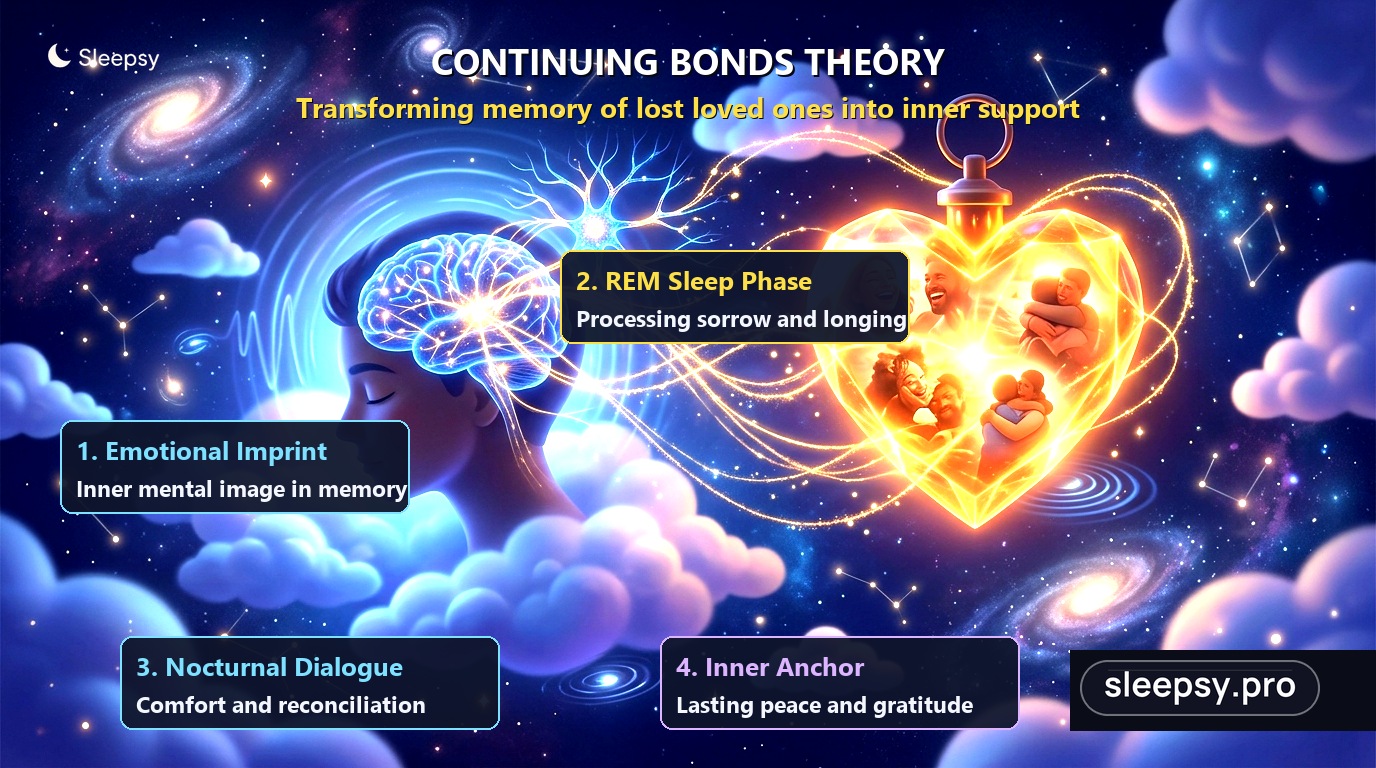
At the center of this process lies Continuing Bonds Theory. A century ago, psychoanalytic orthodoxy insisted on severing emotional ties with the departed. Contemporary research demonstrates the opposite: abruptly breaking connection deepens distress.
Healing occurs when physical attachment transforms into internal dialogue. The sleeping brain constructs an enduring introject: an internalized mental presence holding the voice, wisdom, and comforting guidance of the person we lost.
A Psychological Case Study: The Tea Cup and Unspoken Words
Consider a scenario where an educator repeatedly experiences the same nocturnal scene. In waking life, intense work demands prevented being present during the final hours of an elderly grandparent who had provided nurturing guidance throughout childhood.
Months later, recurrent dreams emerge. The grandparent sits silently at a familiar wooden kitchen table before a cooling cup of herbal tea, looking across with quiet sorrow. The dreamer awakens with intense tightness in the chest, fearing the dream represents an unforgiving accusation.
“I teach empathy and forgiveness every single day, yet each morning I wake up paralyzed by self-reproach. It feels as though professional deadlines made me miss the most important farewell.”
At Sleepsy, our psychological analysis often uncovers the neurobiology behind dream silence. During REM sleep, linguistic centers in the prefrontal cortex lower their firing rate while limbic emotional centers surge. The figure’s silence mirrored the dreamer’s own inability to express grief openly amidst relentless daily responsibilities.
What the dreamer sought was not justification, but emotional warmth. The dream recalled quiet evening tea sessions where one could set aside adult pressures and feel cared for and safe.
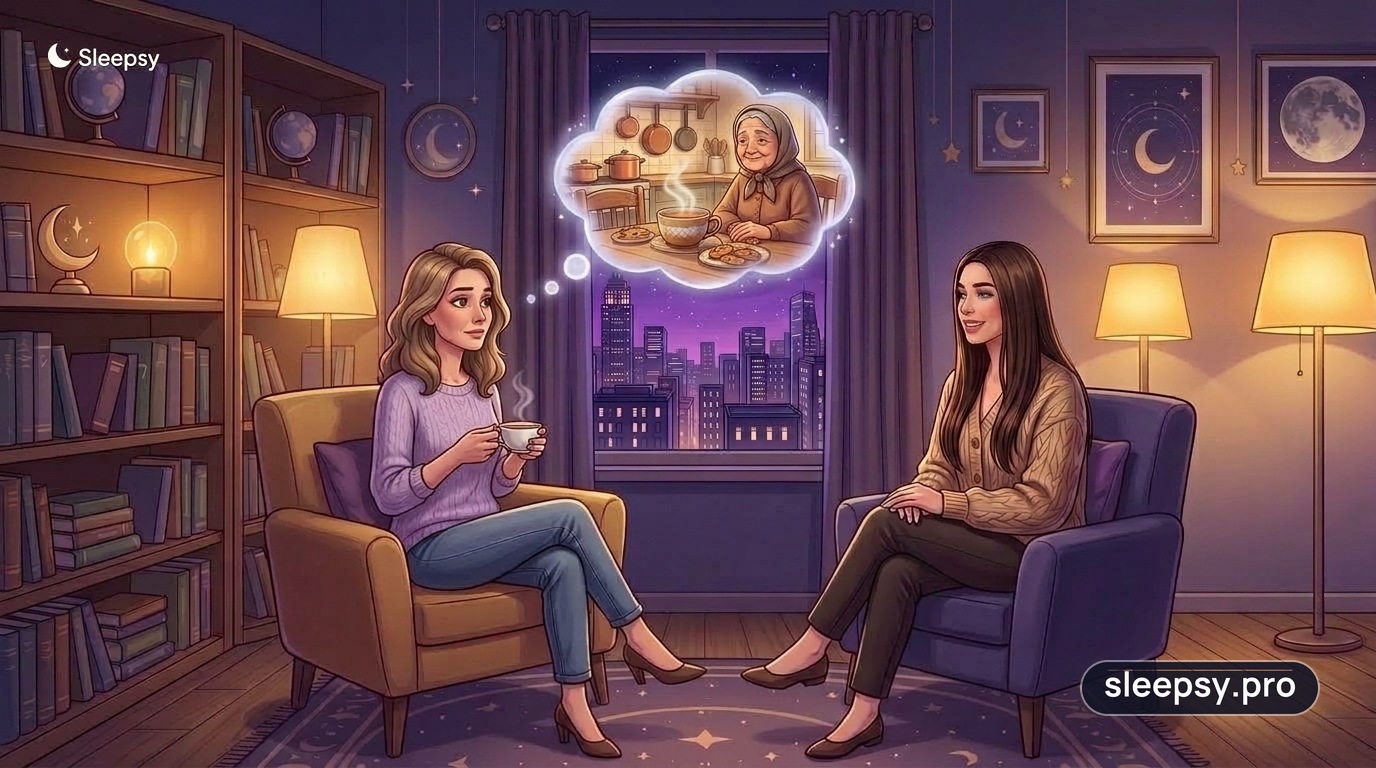
The nightmare did not signify reproach from beyond; it highlighted a living person’s exhaustion and longing for support. After engaging in structured expressive writing to conclude the internal conversation, the nocturnal atmosphere shifted.
Subsequent dreams transformed: the grandparent offered a gentle smile, pushed forward a plate of pastries, and offered comforting touch. Primal dread gave way to warm gratitude and peaceful remembrance.
Dream Scenarios: Why Loved Ones Stay Silent, Hug, or Call
Specific dream motifs reflect distinct waking emotional states. If you frequently experience anxiety dreams and chronic stress, an overloaded brain draws upon emotionally resonant figures from the past to illuminate current vulnerabilities:
- The loved one appears alive, vibrant, and healthy: The mind is actively consolidating the reality of absence. Dreamers often feel initial amazement followed by lucid awareness. This marks a constructive step toward emotional acceptance.
- The person remains silent and does not reply: Speechlessness reflects an internal barrier within the dreamer. The mental representation is present, but words stall due to accumulated guilt, unexpressed sorrow, or reluctance to acknowledge powerlessness.
- Embracing tightly or offering comfort: During demanding life transitions or interpersonal crises, we unconsciously gravitate toward protectors. This dream operates as an internal resource, mobilizing personal resilience.
- Looking angry or weeping: This is not condemnation, but an externalized reflection of your own self-criticism. When harboring remorse over past disagreements, the dreaming mind projects that severity into the loved one’s expression.
- Beckoning you to follow: A common trope in superstitious folklore. In reality, it signals severe psychological exhaustion and an unconscious impulse to step away from waking demands.
When such patterns evolve into persistent recurring dream themes, they indicate an unresolved emotional loop that requires mindful integration.
Mindful Dialogue Exercise: Releasing Post-Dream Guilt
If awakening from a grief dream leaves emotional heaviness, avoid consulting superstitious catalogs. Engage in this three-step therapeutic exercise:
- Morning Grounding: Set your phone aside for at least thirty minutes. Take several slow, measured breaths, wash with cool water, and sip a warm beverage. Write down your exact primary emotion: “I feel lonely,” “I feel guilty,” or “I need reassurance.”
- The Unsent Letter: On a sheet of paper, write down everything you wish you had voiced. Express genuine appreciation, acknowledge regrets, allow tears if they arrive, and establish clear emotional closure: “I honor your memory, but my life continues forward in this world.”
- Identifying Current Depletion: Ask yourself: “What personal exhaustion or unmet need did this dream highlight right now?” The highest honor to those who loved us is taking compassionate care of our own physical health and mental peace.
Key Takeaways
Let us summarize the core insights:
- Superstition vs Reality: Traditional folklore weaponizes grief dreams as omens of misfortune. In truth, encounters with lost loved ones carry no external threat.
- Dream Neurobiology: Grief dreams occur in up to 85% of bereaved individuals. They serve as an organic mechanism for emotional consolidation during REM sleep.
- Continuing Bonds: The mind establishes an enduring internal anchor. We retain the care, wisdom, and emotional legacy of the person within our memory.
- Focus on the Present: A nocturnal scenario mirrors waking needs: acute fatigue, unaddressed remorse, or an appetite for safety and warmth.
Key Takeaway: A dream of a deceased loved one is not an ominous message from the outside world. It is a compassionate reflection of your own memory, reminding you of the strength of love, the necessity of self-forgiveness, and the value of living.